Based on Z&X's hands-on project experience in Thailand, this article is intended for Chinese companies planning to invest in Thailand or set up factories in Rayong industrial estates or the Chonburi EEC. It covers the new BOI rules, BOI reconciliation (write-off), BOI managed services, the BOI tax holiday and CIT exemption, and Thai tax audits and investigations.
1. An Extra Session in Rayong, Fully Booked
14 August 2026, 14:00–17:00 (registration from 13:30), 2nd floor, WHA Eastern Seaboard Industrial Estate (Rayong).
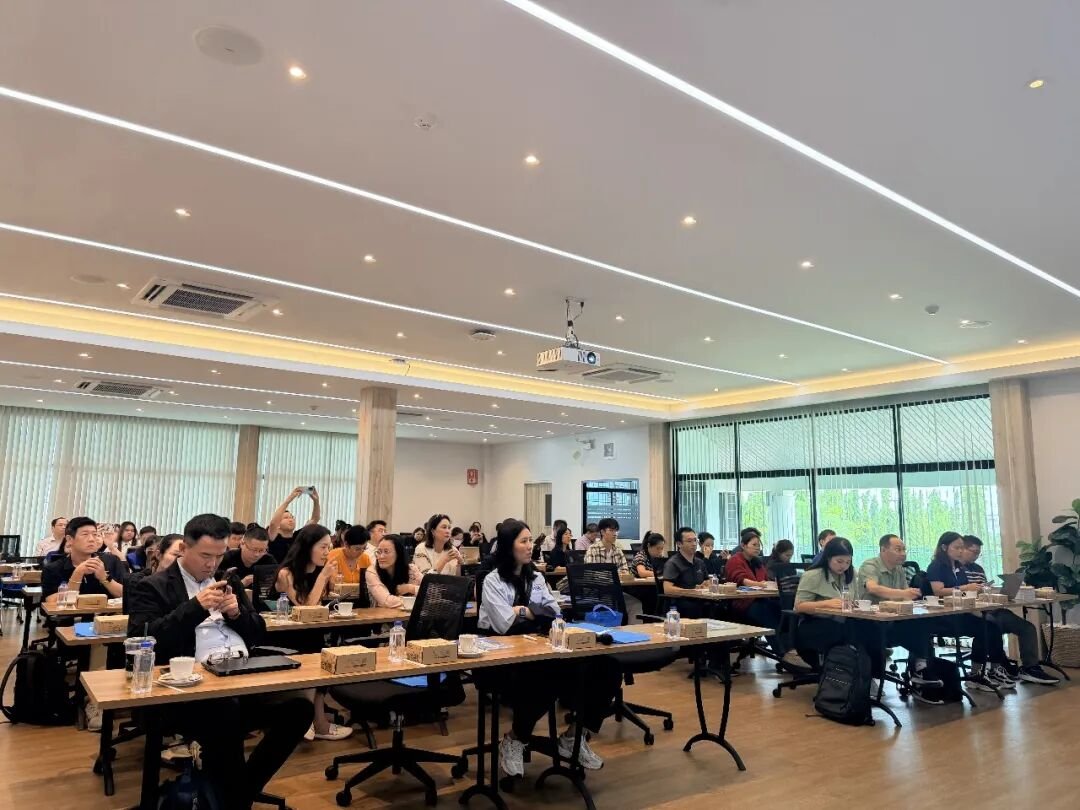
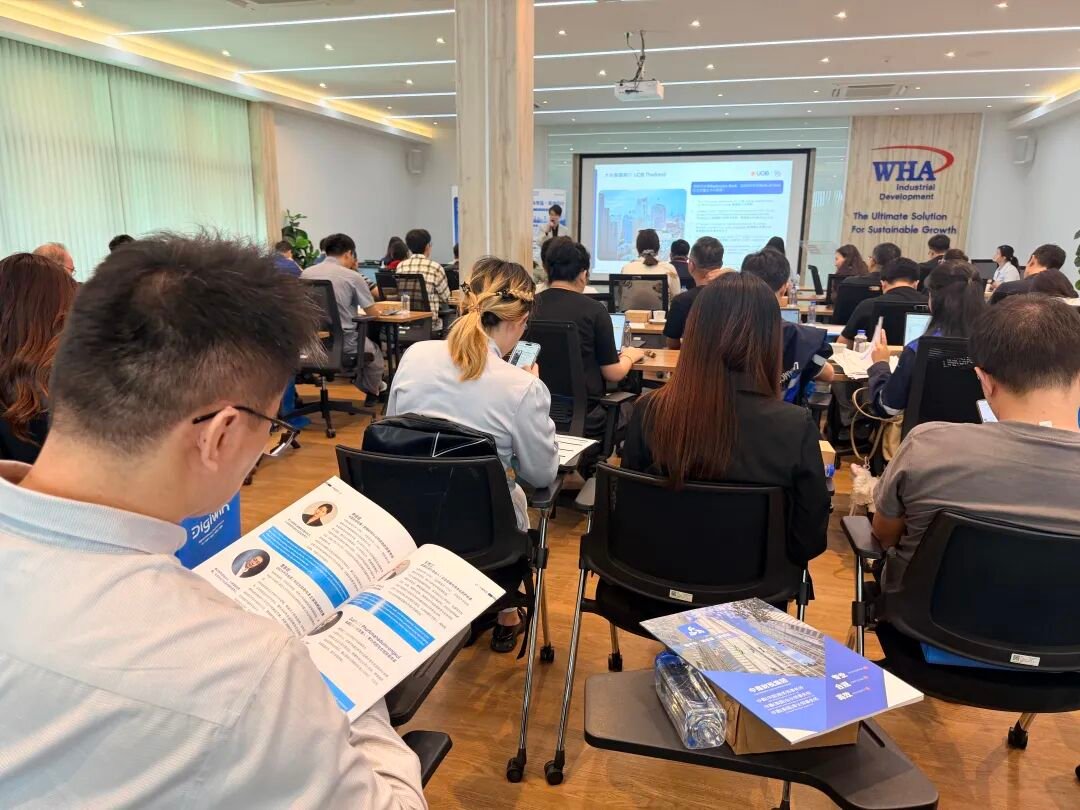
The session was co-hosted by Digiwin (300378.SZ), Z&X Finance and Taxation Group, WHA Industrial Estate and UOB under the theme "New BOI Rules and Upgraded Tax Audits: Digital Compliance Responses for Businesses — Hidden Landmines of Setting Up a Factory in Thailand".
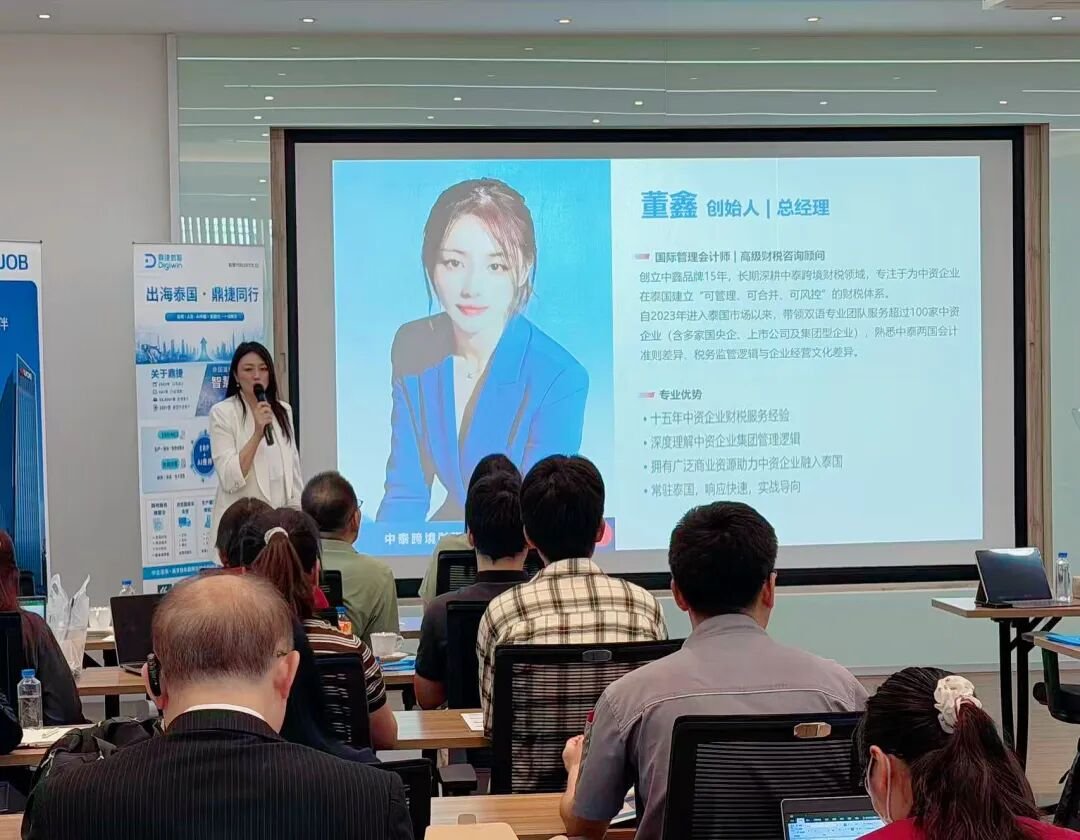
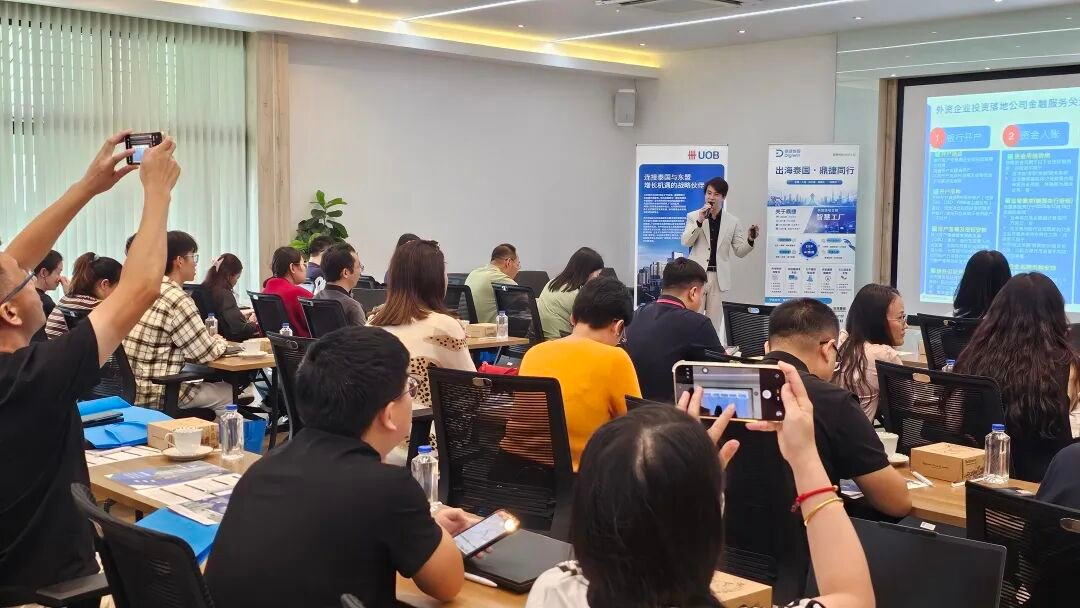
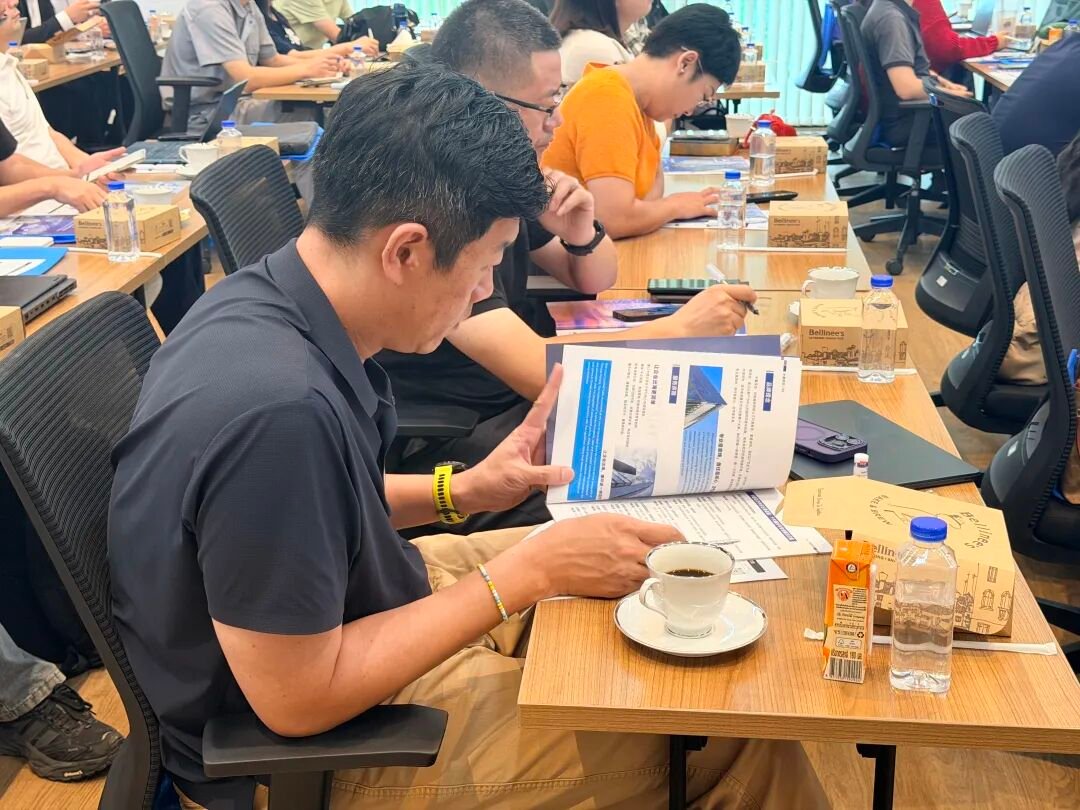
The venue featured service booths for companies going global and networking among Chinese companies. Every seat was taken, many attendees photographed the slides, several representatives stood up to ask questions, and the event closed with a tea break and a lucky draw.
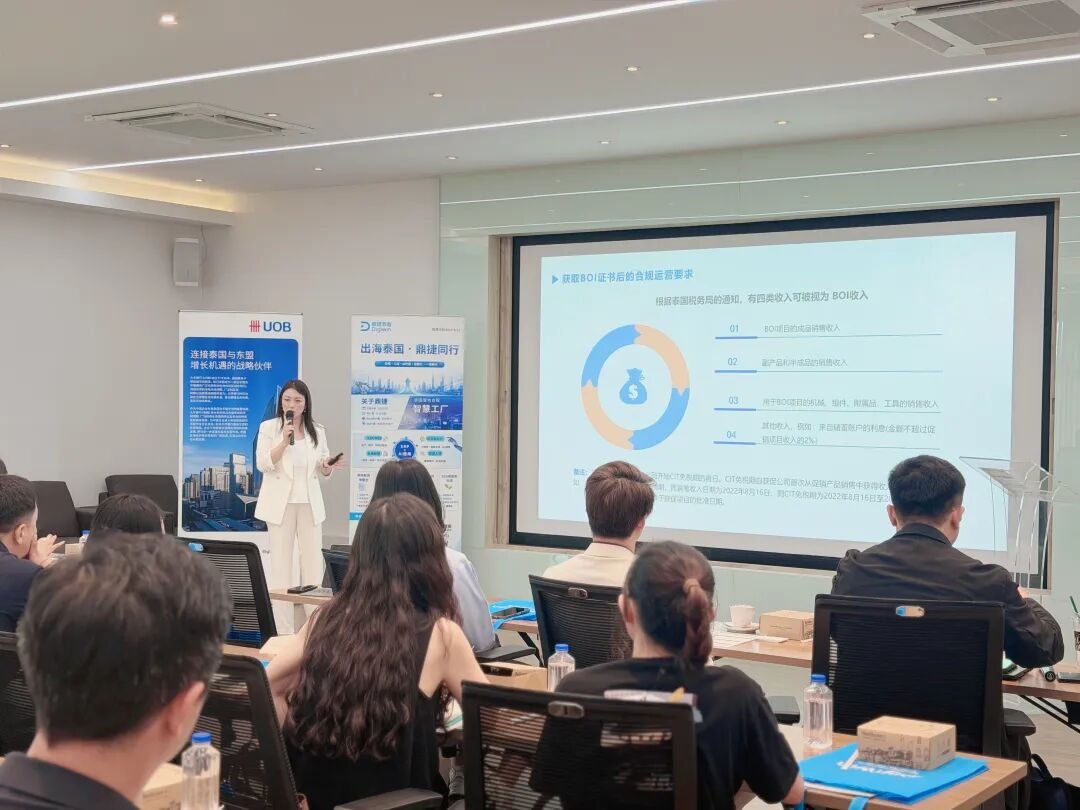

46 check-ins from about 35 companies operating in Thailand. Attendees included Shanghai Edrive, ATOSA, APALTEK, Hongli Auto Parts, Huafeng Power Tools, Fujiu Polymer, Taiming Lighting, Zhongli Paper Technology, Matrix Electronics, Synoelec Technology, SJ Photons, Jinggong Tools and Shuangzhong Industrial, spanning electronics and optoelectronics, automotive and new energy, mechanical and electrical equipment, precision hardware, new materials and chemicals, and light industry and consumer goods. Most attendees were decision-makers and heads of finance.
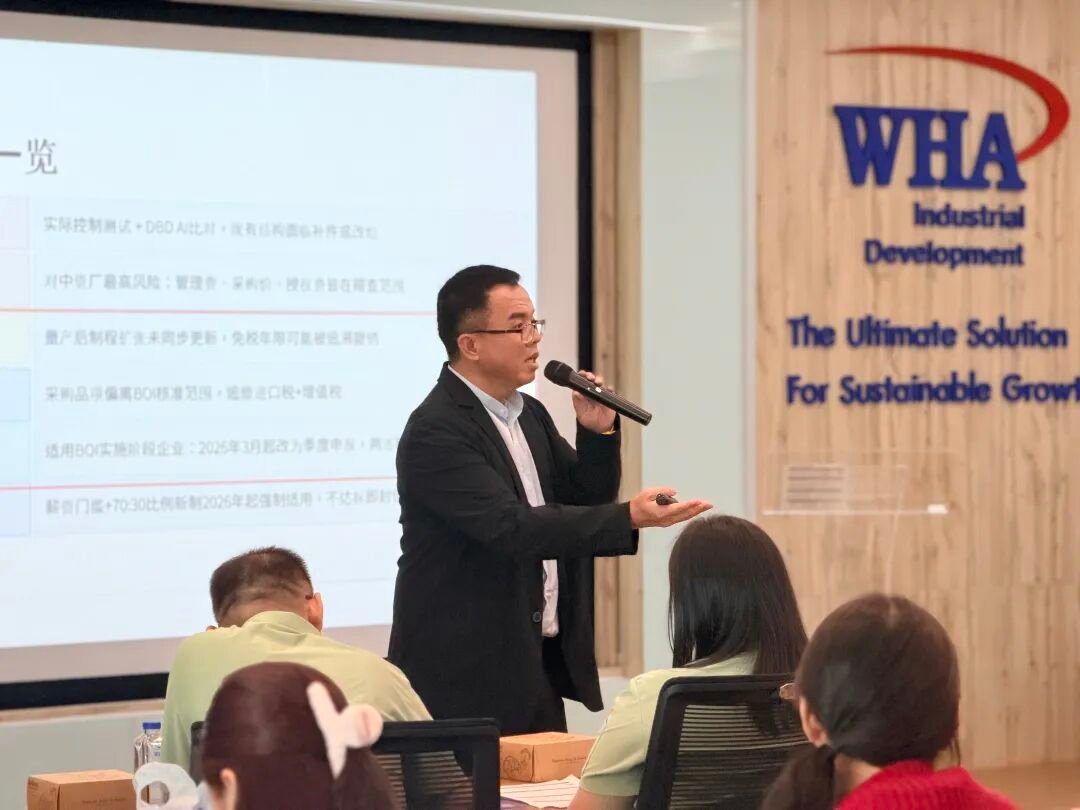
Zhao Di, General Manager of WHA, gave the welcome address and reaffirmed WHA's proposition: The Ultimate Solution For Sustainable Growth.
2. What BOI Compliant Operation Is and Why It Is Essential
BOI compliant operation refers to the day-to-day work a company must do after receiving its BOI certificate to keep enjoying the approved incentives (above all the CIT exemption): continuously meeting the requirements of the BOI and the Revenue Department on income attribution, separate accounting for BOI and non-BOI activities, reconciliation of machinery and raw materials, system records and reporting bases.
The key word is not "application" but "operation", and it runs through the entire tax holiday period.
Incentives are not a vested right locked in once the certificate is issued; they are an entitlement subject to ongoing verification. Speaking from the perspectives of banking, finance and tax, and systems, the three speakers reached the same conclusion:
How money comes in, how the books are separated and how the system provides evidence: if any one link cannot be explained clearly, the incentives may be reduced or even clawed back.
In the words of Dong Xin: Getting the certificate is not the finish line.
3. Xu Qingfeng (Vice President, UOB): Five Banking Checkpoints
Three things about account opening:
🔹 Accounts can be designed around actual business needs, including non-resident accounts; different products may differ in onboarding procedures and fee standards
🔹 Multi-currency accounts in THB, USD, RMB and other currencies are supported; prioritize the currencies the business will need after the project is approved
🔹 For account signing supervision requirements (DSD) and signatory/authorized person arrangements, leave room for long-term authorization
Receiving funds:
New rules from the Bank of Thailand took effect on 19 December 2025: where a single cross-border remittance exceeds USD 200,000, or involves a high-risk industry or a large amount, supporting documents (contracts, invoices, loan agreements, investment fund explanations, etc.) must be provided for verification.
In practice: document packages for registered capital injections, shareholder loans and equipment payments should be prepared before the transfer is made, rather than supplemented after the funds are returned.
4. Dong Xin (Founder and General Manager, Z&X): Four Types of Income Treated as BOI Income + When the CIT Tax Holiday Starts
Key point 1: Four types of income can be treated as BOI income
According to a Revenue Department notification, the following four types of income can be treated as BOI income:
Type 1: Revenue from sales of finished products of the BOI project
Provided that the products and capacity match the approved project.
Type 2: Revenue from sales of by-products and semi-finished products
Scrap, off-grade products and semi-finished goods sold externally are the items most often left out. Leaving them out means income that could have been tax-exempt is taxed as ordinary income.
Type 3: Revenue from sales of machinery, components, accessories and tools used in the BOI project
Disposal of old equipment and resale of jigs and fixtures can also be included, provided import/reconciliation records and proof of use are kept.
Type 4: Other income
For example, interest from savings accounts, up to 2% of the income of the promoted project. How to treat any excess should be determined in line with the latest BOI/Revenue Department announcements.
Practical implications:
Separate accounting is not a simple split between "product sales" and "everything else"; each transaction must be assessed against these four types. Over-classify and the excess will be disallowed in an audit with back taxes due; under-classify and you pay more tax than necessary.
A prudent approach is to build the classification rules into the chart of accounts and the revenue dimensions of the ERP, so that every income entry carries a BOI/non-BOI tag when it is recorded.
Key point 2: When does the CIT tax holiday start?
Rule: the CIT tax holiday starts from the date on which the promoted company first derives income from sales of the promoted products.
Example given at the seminar: if the first income was received on 16 August 2022, the tax holiday starts on 16 August 2022. The starting point is neither the certificate date nor the production start date, but the day the first revenue from sales of promoted products is recognized.
This means three things:
🔸 The tax holiday is "started" by the company's own first sales invoice; start one day earlier and the exemption window starts running one day earlier
🔸 The date, documents and promoted-product status of that first sale must be fully traceable; this is the timeline auditors most like to probe
🔸 Whether trial-production sample sales, contract manufacturing and trading income count directly affects the starting point; confirm the treatment before issuing invoices, based on the latest BOI/Revenue Department announcements
5. Xu Zhihao (General Manager, Digiwin): Can Your System Explain It During an Audit?
Many factories handle both BOI and non-BOI orders, sharing production lines and materials. But once materials enter the warehouse, if they are not clearly separated, no matter how detailed the books are, they will not stand up to scrutiny: if physical inventory, work order material issues and the financial books do not match, it is very hard to show during an audit which materials were used for BOI products.
Once mixed materials cannot be traced, the import duty exemption on BOI-imported materials may be clawed back in full.
The solution is to assign two item codes to the same material in the ERP or MES system: one for BOI use and one for non-BOI use. With materials split from the point of receipt, subsequent issues, consumption and inventory can all be tracked separately. During an audit, system records can be pulled directly, with clear digital evidence.
Digiwin public data: Digiwin Software is listed on the China A-share market (stock code: 300378.SZ), was founded in 1982 and serves more than 30,000 customers worldwide.
6. Q&A: Jia Biaoshun and Su Qing Answer Questions
Jia Biaoshun responded from an implementation perspective: account opening, the accounting system and ERP are not three parallel tracks. How registered capital comes in, how invoices are issued and how income is tagged should be designed together at the early stage of building the factory.
Su Qing addressed the most frequently asked questions on income classification boundaries, the granularity of separate accounting and the tax holiday timeline:
First, build the four-type income classification rules into the chart of accounts; next, file the documents for the first sale of promoted products as a "start-date evidence package"; only then turn to systems. For individual cases, the latest announcements prevail.
7. The Complete BOI Compliant Operation Process
Step 1: Break down the certificate conditions
Extract the promotion category, approved products and capacity, exemption cap and period, machinery and raw material privileges, and shareholding conditions into a one-page compliance obligations checklist.
Step 2: Implement income classification rules
Classify all income as BOI/non-BOI using the four types, and build this into the chart of accounts and invoicing rules.
Step 3: Confirm the tax holiday start date
Lock in the date and documents of the first sale of promoted products and build a start-date evidence package.
Step 4: Set up separate accounting
Define the allocation methods for revenue, costs and shared expenses once and for all.
Step 5: Reconcile materials and machinery
Set up a "one material, two codes" system and an import/export reconciliation ledger, and keep records of privilege use and asset disposals.
Step 6: Embed in systems
Hard-code the rules in the ERP/MES so that digital evidence can be retrieved instantly.
Step 7: Filing and annual compliance
Complete accounting and tax filings, audits and BOI reporting on schedule.
Step 8: Audit rehearsal
Run an internal mock evidence review before a Thai tax audit arrives.
8. Z&X's Practical Strengths
Z&X operates a "two countries, three firms" structure: Z&X (China) Tax Agent Firm, Z&X (Thailand) Accounting Firm and Z&X (Thailand) Audit Firm, with a dual-region setup of Bangkok headquarters + an EEC branch office in WHA Industrial Estate (Chonburi):
For factory clients in Rayong and Chonburi, our advisors are right there in the industrial estate and can visit on site to check warehouses, work orders and systems.
A professional service team of 84 (including Chinese CPAs, certified tax agents and BOI consultants), with 5,000+ clients served.
9. Real Cases
An auto parts company (EEC):
The same production line handled both BOI and non-BOI orders, and materials were not separated. Z&X rebuilt the income classification rules and the "one material, two codes" ledger, and reclassified by-product and scrap sales according to the four-type rules.
A data center project:
Equipment payments abroad during construction were frequent and large. Document packages such as contracts and investment fund explanations were prepared before each payment, and an expense allocation method was established to avoid misallocation to the tax-exempt income side.
10. FAQ
Q: Is BOI compliance outsourcing feasible?
Yes. In essence, rule design, ledger maintenance and filing are handed to a professional team, while the company retains decision-making authority.
Q: Is it secure?
The work is undertaken by a licensed firm under a confidentiality agreement, with minimum necessary access rights and traceable deliverables.
Q: How long does it take?
It follows the project schedule; we recommend completing the core design before the first sale of promoted products.
Q: What does it cost?
Fees are quoted based on project complexity and the number of entities, and an itemized quotation can be provided.
Q: What is the biggest risk?
Misclassified income, unclear separate accounting leading to disallowed exemptions, and a missing start-date evidence chain cannot be fixed on the day of an audit.
11. What We Deliver
✅️Z&X's Relevant Project Experience
To date, Z&X has served: telecommunications companies, data center projects, new energy vehicle supply chain companies, auto parts companies, industrial manufacturers, construction engineering companies, international trading companies and BOI-promoted investment projects.
Services cover: company registration in Thailand, BOI application and managed services, finance and tax compliance, accounting and tax filing, audit services, ERP localization and corporate training.
Z&X Offers
🔹 A Chinese tax agency, a Thai accounting firm and a Thai audit firm
🔹 A dual-region service network: Bangkok headquarters + EEC branch office in WHA Industrial Estate
The full slide deck from the second session and the compliance obligations checklist template are available from Z&X advisors. You are also welcome to book a
BOI compliance health check, in which we review your certificate conditions and provide a list of issues.
☎️Contact Us
🏢 Bangkok Headquarters: 16 Floor, Capital Tower, Bangkok
🏭 EEC Branch: WHA Industrial Estate, Chonburi
📞 Tel: +66 80-964-6222
💬 WeChat: +86 13224113931
About Z&X Finance and Taxation Group
Z&X Finance and Taxation Group is built on a "two countries, three firms" structure: Z&X (China) Tax Agent Firm, Z&X (Thailand) Accounting Firm and Z&X (Thailand) Audit Firm. With its headquarters in Bangkok and a branch office in Thailand's Eastern Economic Corridor (EEC), the team brings 15 years of experience in corporate finance and tax services and focuses on serving Chinese companies investing in Thailand. Its services cover company incorporation, BOI application and compliance, accounting and tax outsourcing, audit and strategic consulting. Z&X has served 5,000+ clients, including 300+ Chinese companies in Thailand, and has assisted with 100+ BOI projects.



 One on one exclusive financial and tax consultation